
Which SEO option suits your UK small business best?
A director comparing an agency proposal, a freelancer quote and an employee keen to take on search engine optimisation, or SEO, should usually choose the model that gives senior direction, enough delivery capacity and internal commercial input. For many UK service businesses, that means external specialist support plus a named person inside the business.
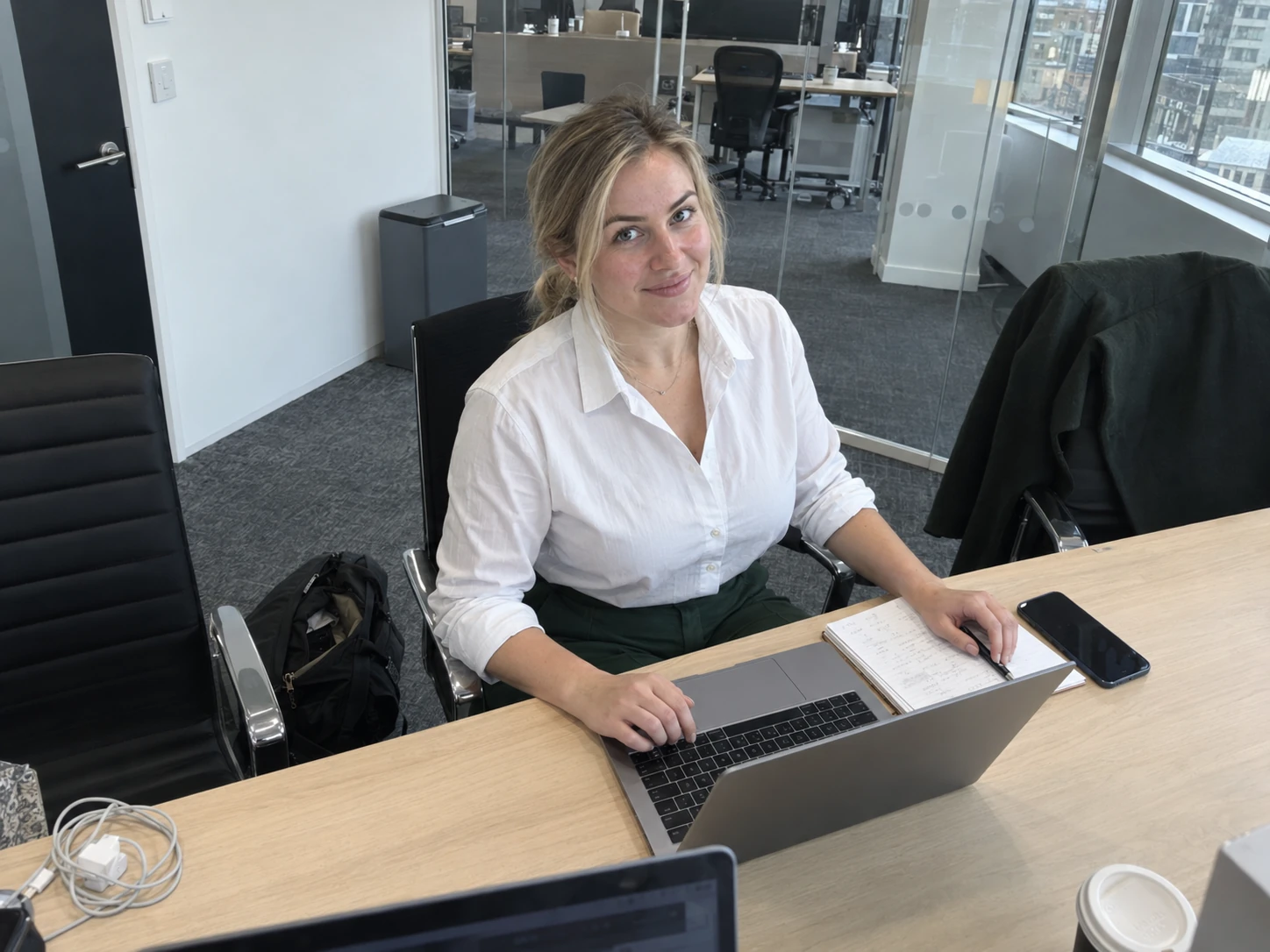
Organic SEO Consultant Conducting Keyword and Competitor Research
SEO models solve different problems
Labels matter less than the working setup behind them. We look at who sets the strategy, who writes or fixes things, who checks the work, and who inside your business keeps the SEO tied to real enquiries.
Here is the clearest comparison.
| SEO model | Strongest fit | Main trade-off | What your business still provides |
|---|---|---|---|
| Agency | Wider delivery across content, technical SEO, reporting and coordination | Senior attention can vary if the account is handed down | Clear priorities, approvals and access to the right people |
| Freelancer | Focused help from one person where the scope is controlled | Capacity and cover need checking | Fast feedback and realistic limits on what one person can handle |
| In-house hire | Regular SEO workload that needs close day-to-day control | Employment cost, tools and management sit with you | Training, direction and enough varied work to justify the role |
| Consultancy-led support | Senior direction without a large agency structure | Some production still needs planning | Business knowledge, decision-making and timely sign-off |
An agency for small business SEO can make sense when you need several moving parts handled at once. A freelance SEO consultant can work well when you know the problem and want direct support. In-house SEO suits a business with enough search work to keep someone productive across strategy, content, technical checks and reporting.
At First Place SEO, we often start by separating strategy from production. Strategy decides what has to happen and why; production is the content, fixes and local work that put it into practice. Once those jobs are separated, the right SEO support model becomes much easier to judge.
Cost includes more than fees
Headline price rarely tells you what SEO will really cost. A low monthly fee, a day rate or a salary all miss the same point: SEO also needs writing, technical changes, reporting time and someone inside your business who can make decisions.
Visible spend
Visible spend is the part that appears on a proposal or payroll line. An agency fee, freelancer fee or salary is easy to compare, but it does not show whether you are getting senior thinking, content work, technical review, local SEO, Google Business Profile input or help with Google Search Console and Google Analytics.
For in-house SEO, salary is only the starting point. The Office for National Statistics reported median gross annual earnings for full-time employees who had been in their jobs for at least a year as £39,039 in April 2025, which gives general UK employment context before employer costs, tools and management time are added. That figure is not an SEO salary benchmark, but it does show why “we will just hire someone” needs a proper business case.
Hidden resource
Hidden resource is where small businesses misread the choice. A freelancer might identify the right fixes, but your developer still has to make them. An agency might send strong recommendations, but your team still has to approve service pages, supply customer detail and keep the offer accurate.
Slow implementation has a cost too. If useful recommendations sit in a spreadsheet for months, the provider model is not the only issue. Compare each option by the work it includes and the work it leaves with you, because that is the only way to compare like with like.

Pro Tip: Compare each SEO model by the work it includes and the work it leaves with your team. A lower fee can become expensive when content, approvals and technical changes sit elsewhere.
Your business still owns SEO
The part that usually gets missed is ownership inside the business. You can outsource SEO work, but you cannot outsource the commercial truth of what you sell, where you sell it and which enquiries are worth winning.
We need that input because search visibility has to match the way your business actually earns revenue. Service pages, local landing pages, Google Business Profile details and case study material all suffer when they are written from guesswork.
Your internal role is practical, not heavy:
- Approvals: Someone needs to sign off content and changes before momentum stalls.
- Service knowledge: We need to know which services matter most, which ones are lower value and which ones bring the best type of enquiry.
- Sales feedback: Search data shows what people look for; your team hears what they ask before they buy.
- Access: Google Search Console, Google Analytics, your website and Google Business Profile need sensible access control.
- Content evidence matters too. Project detail, proof of service areas and common customer questions give SEO work substance.
- Priorities can change. If a service becomes more profitable or a location becomes less relevant, SEO needs to follow that commercial decision.
At First Place SEO, we work directly with directors and management teams for exactly this reason. The best outside support still needs someone inside the business who can say, clearly, “yes, that is what we want to be known for.”

Technical SEO professionals monitoring crawl data and search visibility metrics
Local and AI visibility matter
A service business rarely wins enquiries from one search surface alone. A potential customer might find a service page, see a Google Business Profile result, compare map listings, read reviews, ask an artificial intelligence, or AI, tool for options, then come back through search before making contact.
That changes the provider choice. SEO support now has to cover local SEO for service businesses, Google Maps optimisation, clear service content and enough technical knowledge to keep important pages eligible for search. A page blocked by a robots.txt file, which gives search engines crawl instructions, or a noindex setting, which tells search engines not to include it, will struggle before content quality even enters the conversation.
AI search adds a new layer of scrutiny, but it does not replace the basics. Google Search Central says normal SEO best practice remains relevant for Google AI Overviews and Google AI Mode, and businesses do not need new machine-readable files, AI text files or special schema.org structured data to appear there. Schema.org structured data is code that helps search engines read page information, but it is not a magic ticket into AI answers.
Practical AI-aware SEO starts with clear, useful, indexable content. Shortcut-led AI packaging starts with labels and vague claims. Generative Engine Optimisation, or GEO, is most useful when it means making your information easier to quote, summarise and trust, not pretending that AI visibility sits in a separate technical box.
Reporting also needs common sense. Google Search Console can show performance for search, and AI feature appearances sit within its web search reporting, but small businesses should not expect every AI mention across every tool to be neatly counted. A provider worth taking seriously will explain what can be measured cleanly and what still needs judgement.

Pro Tip: Read access to Google Search Console is enough for an initial audit. Write access should wait until the working relationship, scope and responsibilities are clear.
Durable SEO is a capability
The strongest decision lens is simple: buying isolated SEO tasks creates activity, but building search capability creates a system your business can keep using. One approach buys a batch of pages, links, audits or reports. The stronger approach sets a rhythm for decisions, production and review.
Provider checks reveal which side of that line you are on. Before trusting an agency, freelancer or consultant, we want to see examples of work, a clear view of expected results and timeframe, a sensible way to measure success, and experience that fits the market you serve. During an initial audit, read access to Google Search Console is enough; write access should wait until there is a real working relationship and a clear reason.
Ranking guarantees are another dividing line. Google is plain that no one can guarantee a number one ranking, so a provider promising that outcome is selling certainty they do not control. Better SEO support explains the work, the risks and the measurements without dressing uncertainty as a fixed promise.
Two common approaches sit in front of most small businesses. One buys SEO as a set of disconnected tasks whenever visibility dips or a competitor moves ahead. The other builds a durable search capability, with commercial knowledge inside the business and specialist judgement guiding the work. The second approach takes more discipline, but it gives your budget a job to do beyond paying for motion.

Technical SEO consultants reviewing rankings and website performance metrics
Questions we get asked about choosing SEO support
Can I do SEO myself for a small local business?
Yes, you can handle some SEO yourself if the site is simple and you are willing to learn the basics. Even if you later outsource SEO for your small business, knowing the basics helps you judge advice and approve work faster.
Should I hire a full-time SEO person straight away?
A full-time hire makes sense when you have enough ongoing SEO work to justify the role and someone senior enough to manage it. Many small service businesses reach that point later, after external support has clarified the workload.
Are SEO guarantees a red flag?
A guarantee of a number one ranking is a red flag because no provider controls Google’s organic results. Strong providers talk about goals, likely direction, risks and measurement instead of promising a fixed position.
Does paying for Google Ads improve organic rankings?
No, paying for Google Ads does not improve your organic search rankings. Paid ads and organic SEO can both support visibility, but one does not buy placement in the other.
What access should I give during an SEO audit?
Read access is enough for Google Search Console during an initial audit. Write access and wider site permissions should come later, once the scope, responsibility and reason for access are clear.
This is general information, not professional advice.