
What should you budget for a company website?
Expect anything from about £240 a year for a DIY builder to £10,000 for a full agency build. For most small service businesses, the sensible budget depends on who builds it, how many pages you need, and whether SEO, tracking and ongoing support are included.
A low quote at first glance may cover a basic set of pages and leave the planning to you. Another quote may include page structure, copy support, forms, mobile checks and launch help. Those are different jobs.
We look at website cost through the job the site has to do. If your site only needs to prove you exist, your budget can stay lean. If it needs to bring enquiries, the brief needs more care.
That distinction matters because a website can look finished and still be weak. The useful question is whether the site can be found, trusted and used by the people you want as customers.
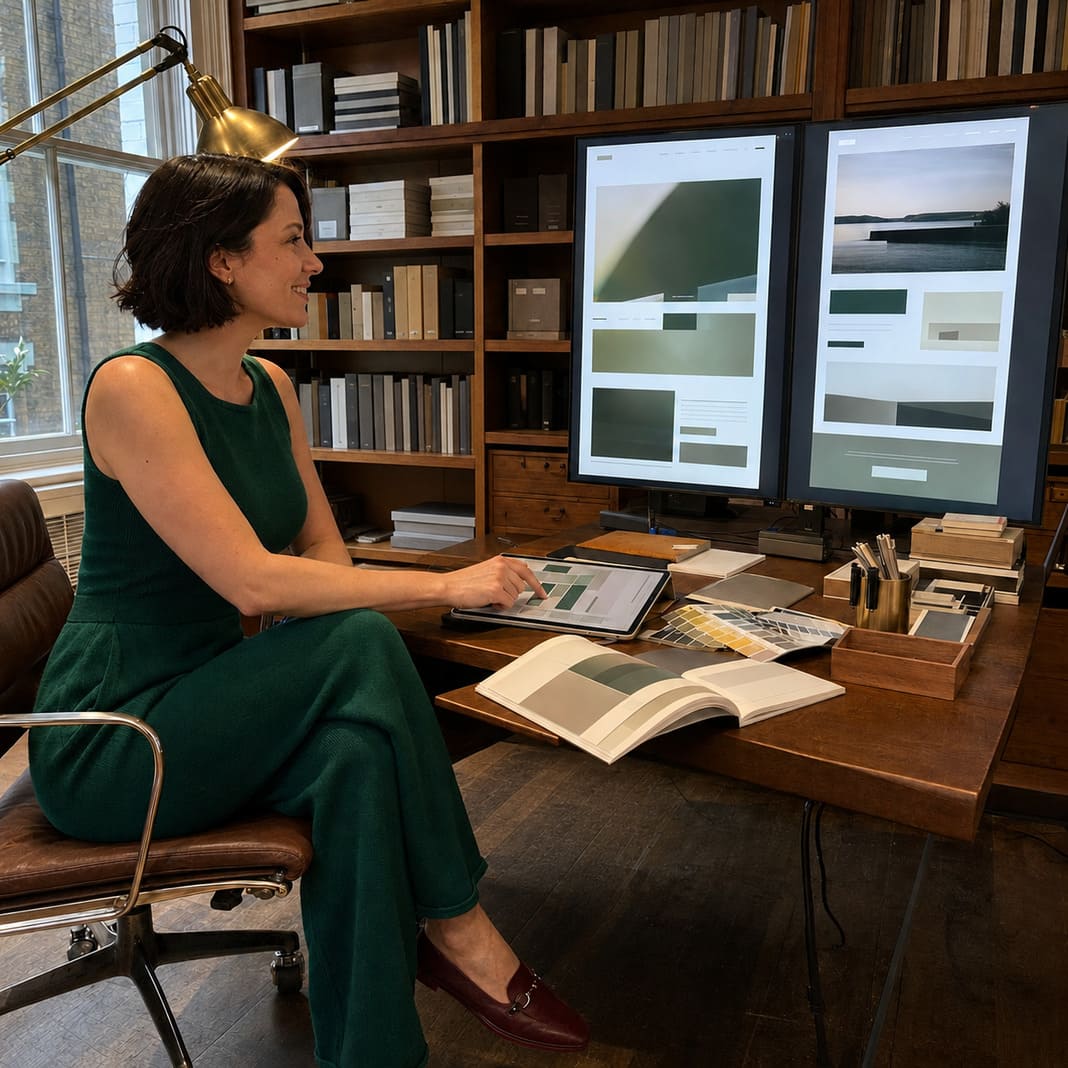
Web designer working on website design at a dual monitor desk
What Is In This Article
- What should you budget for a company website?
- A sensible UK website budget starts with the build route
- Choose the route that matches the job
- SEO changes what the website has to include
- Ongoing costs complete the real website budget
- A clear quote makes the decision safer
- Structured websites are easier to use and easier to find
- Questions we get asked about website costs
A sensible UK website budget starts with the build route
The route changes the price because it changes the amount of work being done. UK website design prices range from low-cost DIY builders to managed agency builds, and each route suits a different level of support.
The table below compares DIY builders, freelance web design and web design agency builds in plain terms.
| Build route | Typical UK cost | When it makes sense |
|---|---|---|
| DIY builder | About £240 to £360 a year | A very small site where you can handle setup and updates yourself |
| Freelance designer | About £1,200 to £2,000 for many straightforward 4 to 5 page builds | A simple service business site with professional design help |
| Web design agency | About £2,500 to £10,000 for a standard small business website | A planned build with design, structure, support and wider marketing needs |
When you search for a 5 page website cost in the UK, the middle range usually gives the clearest starting point. A straightforward 4 to 5 page freelance build often sits around £1,200 to £2,000, provided the brief stays simple.
A useful website budget is built around the route and scope, not a single average price. Booking tools, ecommerce features and integrations need closer scoping because they add work beyond a simple brochure website. Ask what is included before comparing one price with another.
Choose the route that matches the job
Every route has a place when the scope is honest. A DIY builder suits a simple site where you have time to write the pages, choose the images, set up the forms and keep the site updated yourself.
For a one-person service business with a few clear offers, a freelancer can be a good fit. You get professional design help, a cleaner structure and a handover without the heavier project setup that comes with a larger team.
Once your site needs several services, lead forms, tracking, content planning or support after launch, an agency build starts to make more sense. Bigger scope means someone has to take responsibility for how the pages work together and how changes are handled later.
Our advice is to compare responsibility, support and included work before you compare the headline price.
SEO changes what the website has to include
Two websites can look similar on screen, yet only one may have planned service pages, tracking and performance work behind it. A lead generation website needs planned service pages and tracking, not only a polished layout. A polished layout is not enough.
Website design and SEO are linked when the goal is enquiries. A layout-first quote may give you a neat home page, an about page and a contact page. An SEO-ready website also needs page planning around the services people search for, clear headings, useful answers and a structure that Google can read.
At First Place SEO, we plan Web Design and SEO together when a site needs to support enquiries. Keyword and competitor decisions use Google Search Console and Semrush, so the page plan is based on search demand and real site data where available.
Speed and mobile use also belong in the brief. Google Search Central describes Core Web Vitals as measures of loading performance, interactivity and visual stability. Its current targets include main content loading within 2.5 seconds, page response under 200 milliseconds, and layout shift below 0.1.
AI search visibility also rewards clear structure. ChatGPT, Gemini and Google AI need service pages and short, direct answers they can understand. That does not promise mentions in AI answers, but it gives the site cleaner material for normal search and AI search to work with.
Google Search Central also warns buyers to beware of anyone guaranteeing rankings or claiming a special relationship with Google. No one can guarantee a number 1 ranking on Google. A good website brief gives search engines better pages to assess.

Pro Tip: Ask for the list of page URLs the builder expects to create before you agree the price. It is the fastest way to spot when a quote is light on scope.
Ongoing costs complete the real website budget
When a quote looks cheap, the missing items are often found after launch. A freelancer-built small business site often needs an extra £100 to £300 a year for domain registration, hosting and annual maintenance.
You also need to know whether the quoted price includes VAT. Most goods and services in the UK are charged at 20% VAT, so a price shown before VAT is a different cost to a price shown after VAT, especially if your business cannot reclaim it.
Common ongoing website costs include:
- Domain registration, which keeps your website address active.
- Hosting, which keeps the website online.
- Email setup, if your business email is linked to the domain.
- Maintenance, including updates and fixes after launch.
- Support, where someone handles small changes or technical issues.
Privacy and company details also belong in the quote check. The ICO says a business needs a privacy notice if it holds personal data such as names and email addresses. Website visitors must also be told that cookies are being used and what they do, with agreement needed for cookies that are not strictly needed to run the site.
For a limited company, GOV.UK says the website must show the registered number, registered office address, place of registration and limited company status. These are small items, but they are easier to handle during the build than after the site has gone live.
Compare the first year cost as well as the build cost.

Two people reviewing website design on a large screen with notes
A clear quote makes the decision safer
Two quotes can both say £2,000 and buy very different things. One may include copywriting help, enquiry form setup and launch support. The other may cover page design only, leaving you to sort the rest.
A good website quote should say how many pages are included, who writes the words, how images are handled, how many rounds of changes you get, and what happens at launch. If SEO is mentioned, ask which parts are included. Keyword research, service page planning, tracking and speed work are real tasks, so they should be named clearly.
Ownership needs plain wording too. You should know who controls the domain, who has access to the hosting account, and whether you can move the site to another supplier later. Ask about CMS access as well, which means the login that lets you edit the website.
Timelines help you test the quote. A typical freelance website project takes two to six weeks from briefing to launch, so a much faster promise needs a very small scope and quick feedback from you.
At First Place SEO, fixed pricing means the figure we quote is the final figure. That same principle is what we think every buyer should look for: clear scope, clear ownership and no vague extras hiding behind the word “website”.

Pro Tip: Save a copy of your domain registrar login and hosting login on day one. That record makes handover much easier if you change supplier later.
Structured websites are easier to use and easier to find
A sensible small business web design budget covers the structure that helps people understand your offer quickly. The home page matters, but service pages, mobile usability, tracking and ownership carry much of the long-term value.
Search has also widened beyond the old list of blue links. AI search visibility is already part of how businesses are found and checked, which makes clear service pages, useful FAQs and structured answers worth planning from the start.
The best website value for business comes from a site that a customer can use, that you can own properly, and that search systems can read without guesswork.

Couple viewing a website design on a large wall screen
Questions we get asked about website costs
Can we build the website in stages if the budget is tight?
Yes, a staged build can work if the first version has the right structure. We would focus first on the home page, main service pages, enquiry route and basic tracking, then add supporting content later as budget allows.
Will changing our website affect existing Google traffic?
A rebuild can affect search traffic if page URLs, content or tracking change without a plan. Before launch, we check which pages already get visits and make sure important pages are carried across properly.
Do we need separate pages for each service?
Separate service pages help when customers search for different things. A single page listing every service can be thin, while a focused page can answer a buyer’s exact question and give Google a clearer page to assess.
Can we keep our current website wording and images?
You can keep existing words and images if they still explain the business well and you have the right to use them. In practice, many rebuilds need at least some rewriting so pages answer real search questions and guide people to enquire.
Should a website quote include support after launch?
Support after launch is worth having if it covers the jobs you will actually need, such as fixes, updates and small content changes. A vague care plan has less value than a clear note of what is included and how requests are handled.